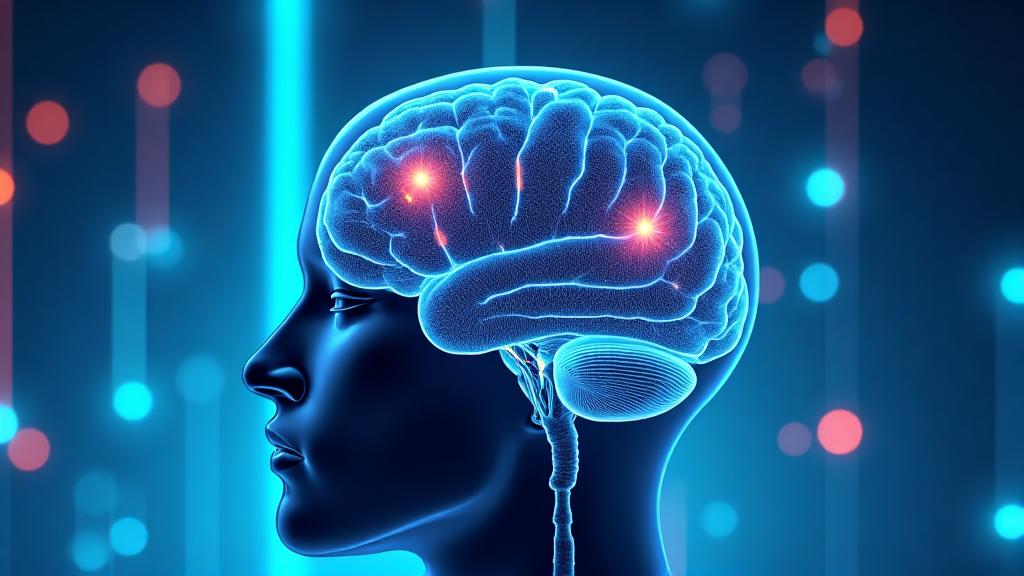
Brain cells communicate using millisecond-scale electrical impulses, not chemical diffusion alone. The first human EEG was recorded by Hans Berger in the 1920s, but the electrical theory of brain activity was proposed almost a century earlier by Robert Bentley Todd. Modern tools like voltage-sensitive dyes can now image thousands of neurons simultaneously in living animals. Low-level electrical stimulation (tDCS/tACS) is FDA-cleared for conditions like depression and anxiety, with virtually no side effects.
I’ve spent a lot of time digging into this topic, and honestly, the history is wild. Back in the 1840s, a guy named Robert Bentley Todd was hanging out with Michael Faraday at King’s College London. Faraday was busy figuring out electricity and magnetism, and Todd just straight-up applied those ideas to the brain. He called nervous conduction a “polar force” and said epilepsy was basically a sudden change in electrical tension, like a spark jumping from a battery. This was decades before anyone could actually record brain electricity. Todd even introduced the terms “afferent” and “efferent” into neuroscience. That’s how far ahead he was.
Fast forward to the 1920s: Hans Berger builds the first human EEG machine. He places electrodes on a person’s scalp and measures tiny voltage fluctuations coming from the brain. That machine is still the foundation of clinical neurology today. When someone has a seizure or sleep disorder, the EEG shows abnormal patterns, spikes, slow waves, that sort of thing.
These days, the coolest stuff is happening at universities. At Boston University and MIT, researchers have engineered a fluorescent protein called SomArchon that sticks to the cell body of neurons and lights up when they fire. You can put it in a mouse brain, make the mouse run on a little ball, and watch hundreds of individual neurons fire in real time under a normal microscope. I take that back, it’s not just firing. It shows sub-threshold changes, the tiny electrical fluctuations that happen even when a neuron isn’t sending a full spike. That’s stuff you just can’t see with electrodes.
EEG itself is pretty simple: you put conductive electrodes on the scalp (usually with a gel or saline), connect them to an amplifier, and record the tiny voltage oscillations. The patterns have names, alpha waves when you’re relaxed, beta when you’re alert, delta during deep sleep. Clinicians look for certain signatures: in epilepsy, you’ll see “spikes” and “sharp waves.” In brain death, the EEG goes flat.
There’s also electrical stimulation, which some people are using at home now. Transcranial direct current stimulation (tDCS) sends a tiny current, 1 to 2 milliamps, through electrodes on the head. It’s been studied for depression, anxiety, PTSD, and even Parkinson’s. One device called Cervella puts the electrodes into the ear cushions of noise-canceling headphones, so nobody knows you’re using it. The downside? Efficacy is around 50–60%, according to the company CEO. But because it has no side effects and doesn’t interact with drugs, it’s becoming a popular “add-on” therapy.
If you’re reading this because you’re interested in optimizing your own brain function, there are products on the market that claim to influence electrical activity. At Truth In Reviews, we’ve tested a bunch. One that stands out is The Brain Song, which uses sound frequencies to guide your brainwaves. Does it do what a $50,000 EEG machine does? No. But if you’re looking for something to help you relax or focus, it might be worth a try. You can check out our full review here.
Another product in the brain health space is The Memory Wave, which uses audio tracks to supposedly enhance memory and cognition. We’ve tested it too, and while the science behind the specific claims is thin, some users report better concentration. More details here.
But here’s the thing: no consumer product comes close to what researchers are doing with molecular voltage sensors. That stuff is cutting-edge. It’s letting us see, for the first time, how neural circuits actually compute behavior. Edward Boyden (the MIT guy who helped pioneer optogenetics) says we’ll “solve some small brain circuits completely” in the next five years. That would be a genuine step toward understanding what a thought or a feeling actually is.
If you want to measure your own brain waves, consumer EEG headsets like Muse or Emotiv exist, but they’re not medical grade. The signals are noisy. For clinical issues like seizures, sleep disorders, or suspected brain death, a proper medical EEG is the only way to go. Low-level electrical stimulation devices (tDCS/tACS) can be bought over the counter, but talk to a doctor first. The parameters (current level, placement, duration) matter a lot. The science of voltage imaging is moving fast. Expect to see better brain-computer interfaces and neural prosthetics in the next decade.
FAQ:
What is the electrical activity of the brain?
It’s the rapid electrical impulses that neurons use to communicate. These impulses travel along axons and across synapses, enabling everything from movement to memory.
How is brain electrical activity measured?
The main tool is electroencephalography (EEG), which uses electrodes on the scalp to detect voltage changes. For more precise research, scientists use implanted electrodes or fluorescent voltage sensors.
Can I measure my brain’s electrical activity at home?
Yes, consumer EEG headsets are available, but they are less accurate than medical devices. They can show general brainwave patterns (alpha, beta, etc.) but not fine-grained neuronal activity.
Does electrical stimulation of the brain work?
Yes, for certain conditions. Transcranial direct current stimulation (tDCS) and transcranial alternating current stimulation (tACS) have shown benefits for depression, anxiety, and chronic pain. Efficacy is around 50–60% with minimal side effects.
What’s the latest research on brain electrical activity?
Recent breakthroughs include voltage-sensitive dyes like SomArchon that allow imaging of individual neuron firing in living mice. This could lead to better understanding of neurological diseases and new therapies.
Are there products that claim to enhance brain electrical activity?
Yes, many. Products like The Brain Song and The Memory Wave use audio frequencies to influence brainwave states. While not backed by rigorous clinical trials, some users find them helpful for relaxation or focus. You can see our reviews at the links above.